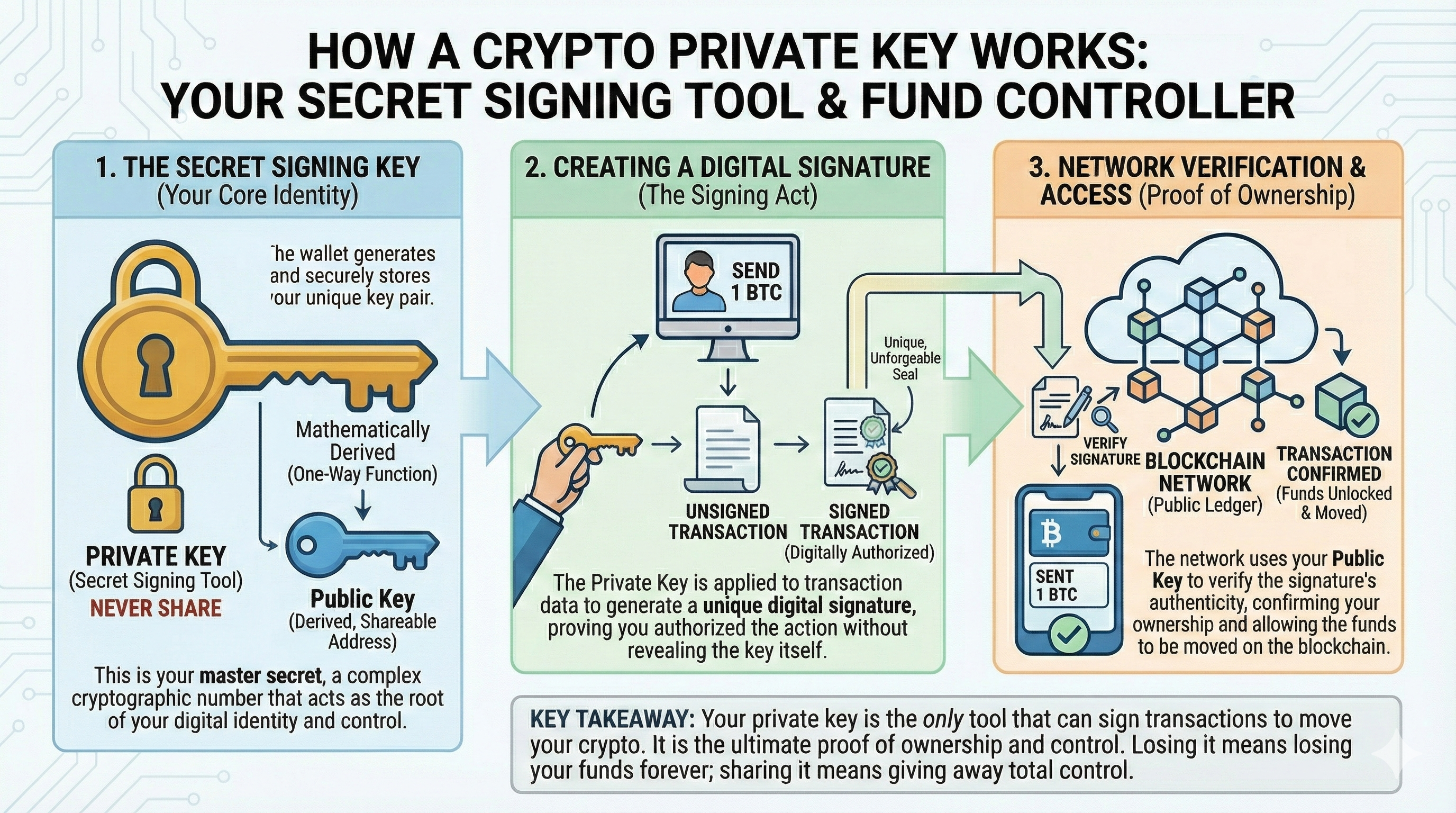
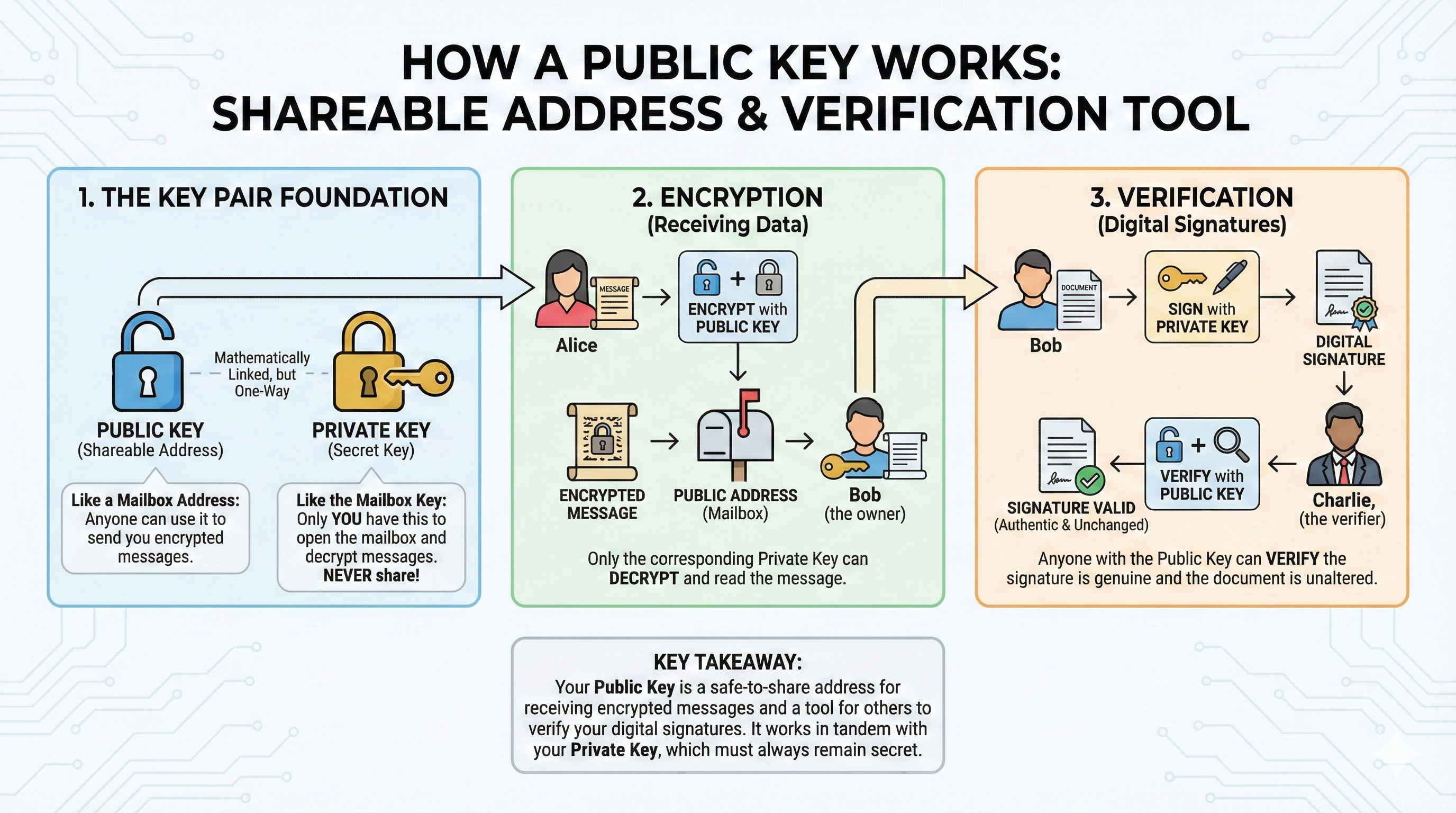
Multisig (multi-signature) is a security strategy that requires multiple private keys to authorize a wallet transaction. For example, a multisig wallet might require 2 out of 3 signatures to sign a transaction.
Instead of a single private key controlling a set of funds, creating a single point of failure, multisig distributes authorization across a quorum of independent keys. This ensures that no single lost or compromised key results in a loss of assets.
In the context of digital sovereignty, multisig is often considered the definitive architecture for professional-grade security. It moves users away from the precarious 1-of-1 model used by standard crypto wallets , where a single mistake can be fatal. Instead, multisig leans into the decentralization ethos at the heart of cryptocurrencies .
The 1-of-1 Problem #
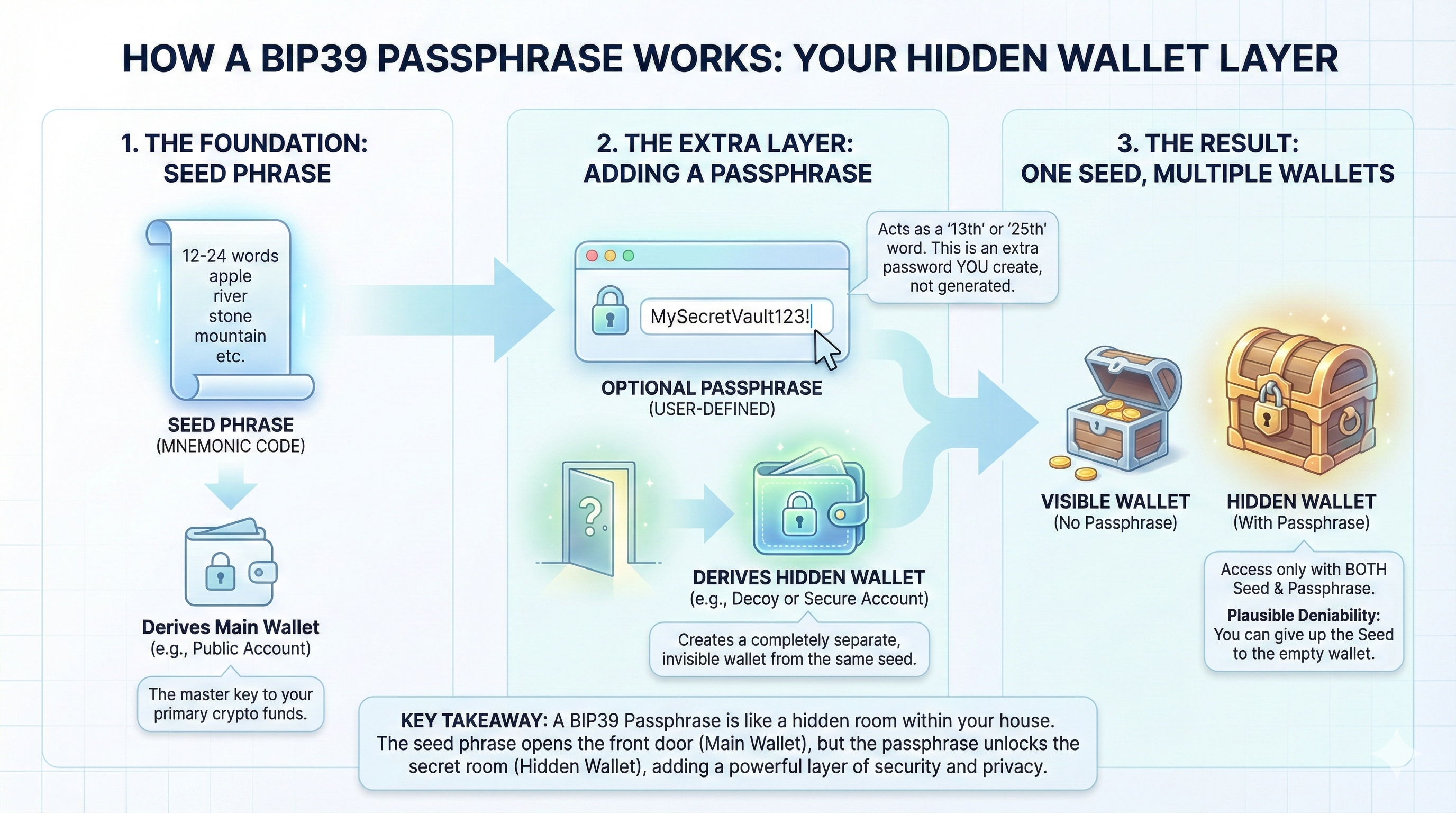
Most new users start with a single-signature wallet (a single seed phrase ). If that seed phrase is discovered, whoever has it can access the funds. Multisig solves this risk by introducing distributed security. Multisigs set a threshold, such as 2-of-3 signatures. An attacker would need to compromise multiple physical and digital locations to access the assets.
Why It Matters #
Multisigs address storage concerns, including protection against physical threats and eliminating the single point of failure that defines a standard cryptocurrency wallet.
- 1. Eliminates Single Points of Failure: In a standard wallet setup, losing the seed phrase can cause you to lose access to your funds. With multisig, you can lose one participating private key and its backup and still maintain access to your funds using the remaining keys in the quorum. This provides a safety net that is impossible in single-signature wallets.
- 2. Physical Threats: A multisig wallet allows the keys to be distributed in different locations. A single signer at one location can’t be coerced into signing a transaction. The single signature won’t reach the quorum threshold.
- 3. Distributed Governance for Shared Assets: Multisig provides a code-enforced way to manage shared assets. The distributed keys ensure no single member can perform unauthorized transactions. The network requires a minimum number of signatures for each transaction.
Thresholds and Quorums #
A 2-of-3 multisig represents the most common setup, but this quorum can vary based on your needs. In a 2-of-3 setup, you generate three keys. You might keep one on a hardware wallet at home, one in a secure vault, and one with a trusted third party or a separate location. To move money, you only need two of the three. This allows for one key to be lost or destroyed without catastrophic consequences, while still requiring two keys for any transaction.
The Debrief #
Multisig serves as the go-to architecture for eliminating single points of failure. It also offers distributed consensus for shared assets. Individual signing devices can range from hardware wallets to trusted software apps, or even other multisig wallets.